
A closed circuit of rollers and banked turns, ridden without pedalling, on the pumping motion of the body alone.
A pumptrack is a closed circuit of rollers and banked turns, ridden without pedalling, on the pumping motion of the body alone. With no sharp edges, nothing to grind and a one-way flow that limits collisions, it is the most universal riding facility there is: bikes, balance bikes, scooters, skateboards, skates — and wheelchairs.
It suits every level, from a first attempt to national federation competition, and it is almost always the best first stone to lay in a town's riding offer. It is the facility Evolving Skatepark most often recommends to open a project with.
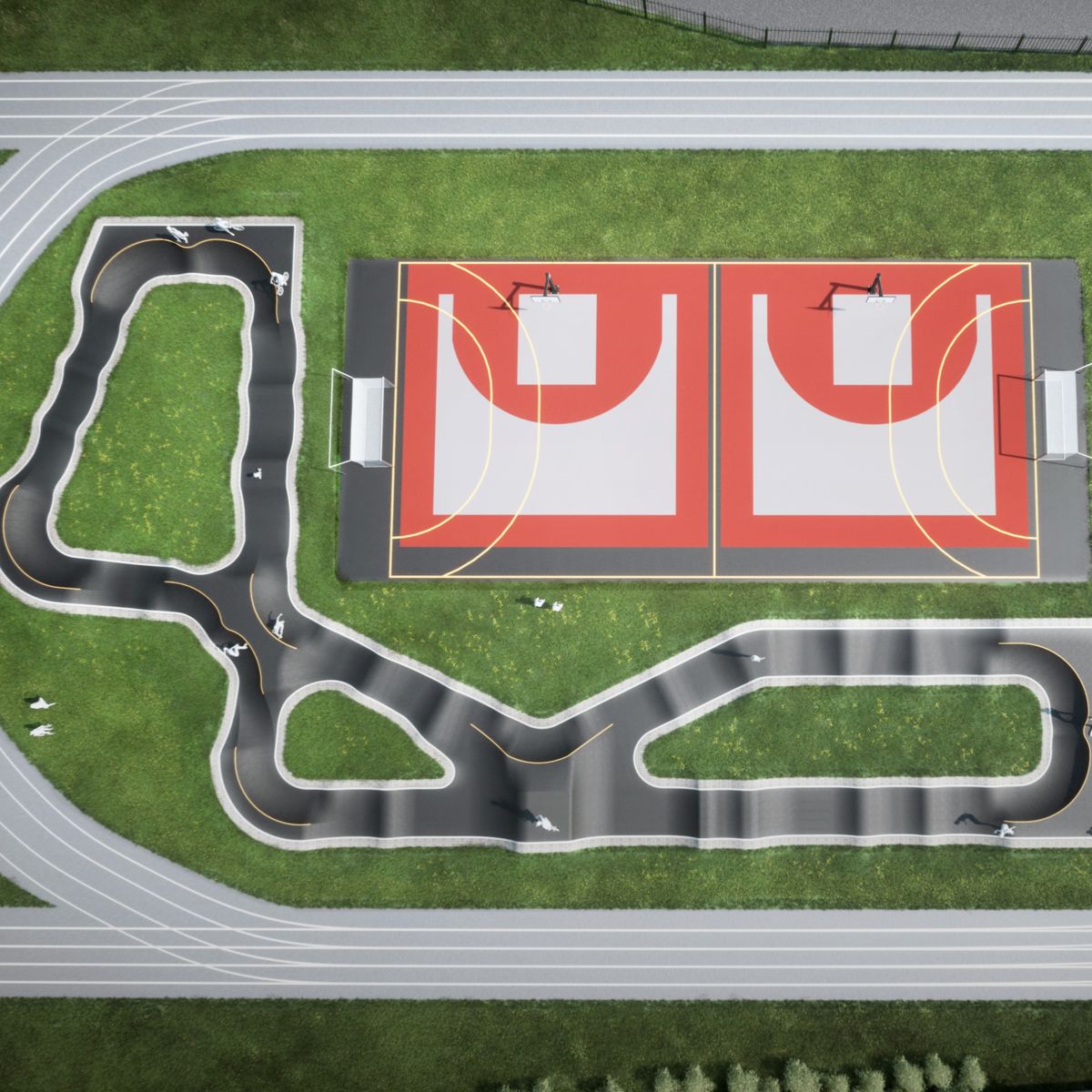
The AFNOR SPEC 52-113 standard sets a floor. Evolving Skatepark's experience is that you often need to go further.
To multiply the possible lines and organise how the space is shared when it is busy, so that different levels can ride together.
On a site of at least 1,800 m². We advise against a plot less than 50 m long or 25 m wide.
The standard requires the learning loop to be separated from the general circuits.
| Circuit type | Min. width | Adaptive sport |
|---|---|---|
| Winding lines and single rollers | 2,50 m | 3,00 m |
| Learning circuit | 3,00 m | 3,50 m |
| Landing doubles and triples | 3,00 m | 3,50 m |
| AFNOR SPEC 52-113 standard | 2,00 m | — |
Para-sport widths following MOBIL'iKi's recommendations, with whom we designed France's first inclusive pumptrack at Bois d'Arcy.
We always favour the width of the lines and the size of the platforms over sheer length: that is what makes the track safe and lets different levels ride together.
That figure buys a circuit of two interconnected loops on an 1,800 m² plot. It covers neither the design fees, nor the associated services, nor the landscaping.
What moves it: the catchment you are aiming at — allow +25% for each additional 30 minutes — the level of competition intended, and the comfort features.
Provided it was designed for it. On request we design tracks that are universally rideable, with our partner MOBIL'iKi.
WCMX, para-skate and para-BMX have demands of their own. A wheelchair has neither the weight, nor the centre of gravity, nor the means of propulsion of a bike: how it behaves in a turn and over a roller is radically different.
Designing for "accessibility" in the regulatory sense — a path, a parking space — is therefore not enough to make a pumptrack rideable. You have to move from accessibility to universal rideability, and that is settled at scheme design, not at handover.
That is why we work with specialist occupational therapists: a rideability appraisal, design support, and use testing carried out by wheelchair riders before the works are handed over.
| Circuit type | Standard | Adaptive sport |
|---|---|---|
| Winding circuit | 2,50 m | 3,00 m |
| Learning and landings | 3,00 m | 3,50 m |
To which add turn radii, platform gradients, signage, independent access to the start gates and the surfacing. A modest extra cost if planned for, a very heavy one if put right afterwards.
Bois d'Arcy (78), 1,500 m², delivered in 2026. Designed with MOBIL'iKi for universal rideability.
Plouhinec (29): riding over and under, a first in France on this type of facility.
Villenave d'Ornon (33): the first cushioned jump module installed on a pumptrack in France.
World level at Roubaix (59), national level at Rennes (35) and Barr (67).
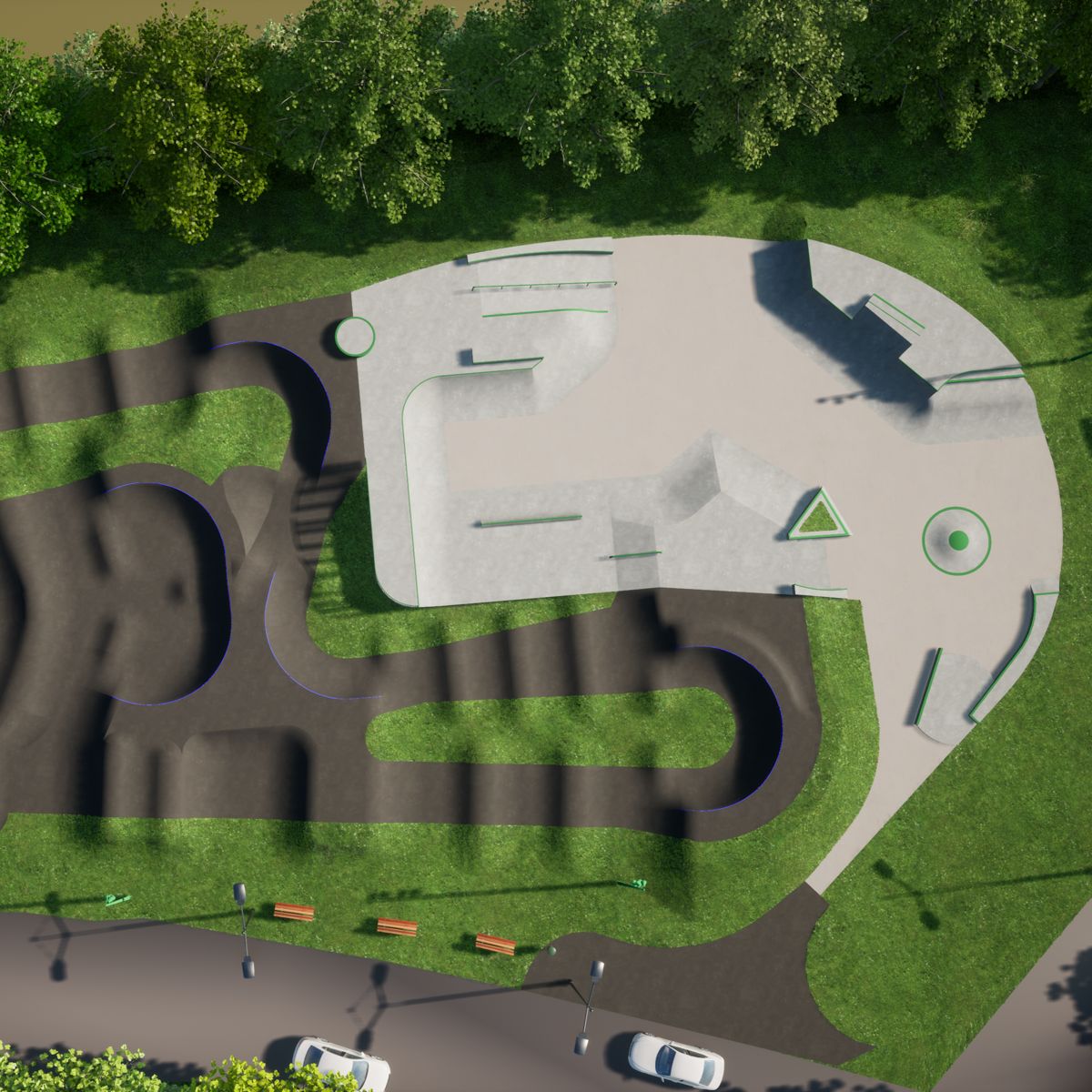
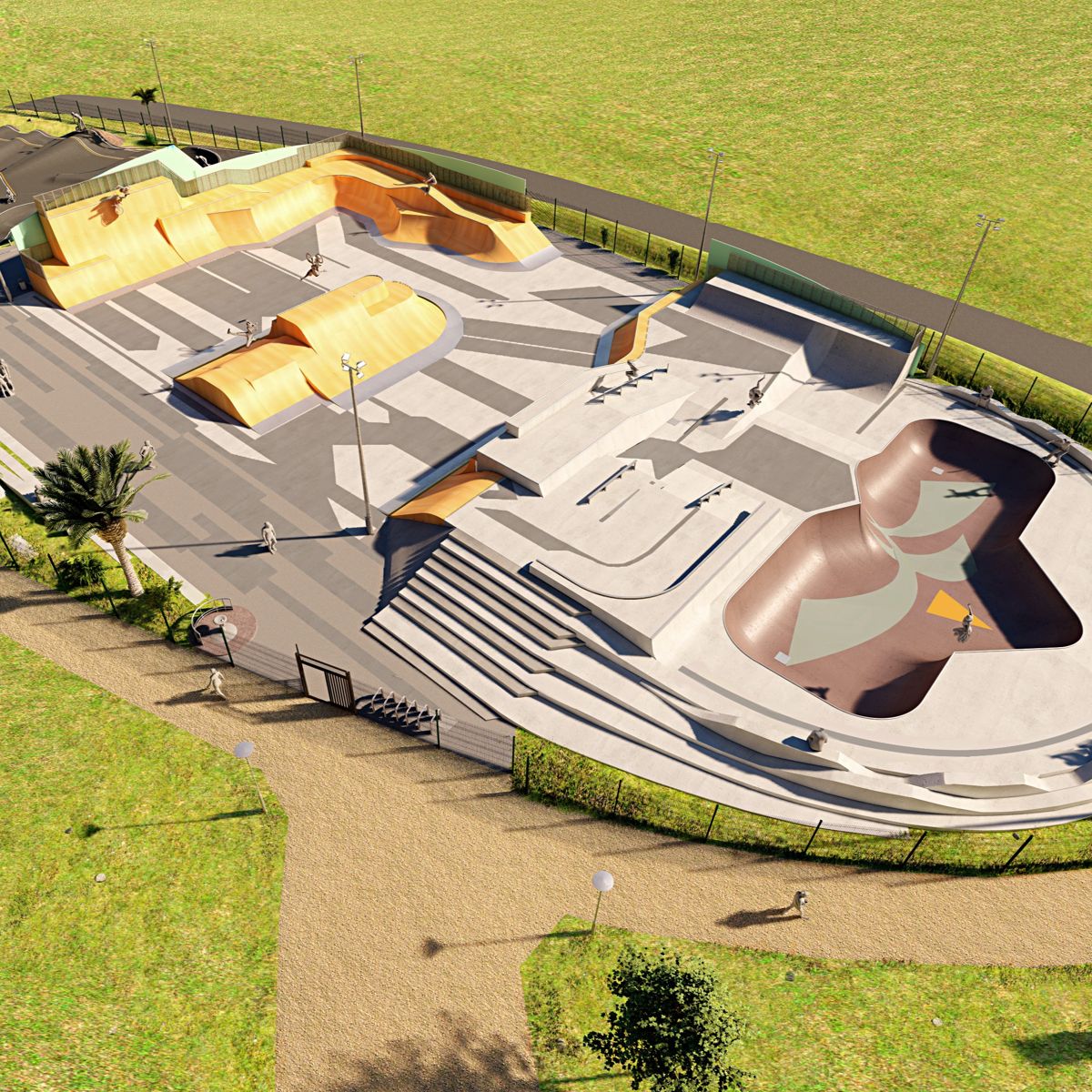
We answer a town launching its feasibility study just as readily as an authority still weighing up whether a facility makes sense at all. The first conversation costs nothing and often clears up a great deal.