
Most of the tenders we receive ask for "a skatepark for all ages, all levels and all four disciplines" — on a site and a budget that cannot deliver it.
We are regularly asked for "a skatepark with a pumptrack", as though they were two items from the same catalogue. They are two ways of riding, two audiences, two budgets. And "streetpark", "bowl" and "freestyle park" are not alternatives to a skatepark: they are its parts.
You clear obstacles
These three are parts of one facility, not rivals. Most of our skateparks combine two or three of them on a single slab.
You carry your speed without pushing
It does not break into parts. You size it and you draw it, but it stays a single object — which is also what makes it approachable from the very first session.
| Skatepark | Pumptrack | |
|---|---|---|
| The movement | Taking on obstacles: climbing, jumping, grinding | Pumping: carrying your speed through body movement |
| Learning time | Several months before the first tricks | One session is enough to complete a lap |
| The audience | Committed riders, mostly 10 to 25 | All ages, from 3 upwards, families and everyday cyclists |
| Falls | Are part of learning | Rare: speed stays under control |
| The surfacing | Cast-in-place concrete, tight flatness tolerances | Usually asphalt, concrete as a variant |
| The footprint | From 420 m² for a streetpark | From 1,800 m², of which around 700 m² surfaced |
| The median budget recorded | €190,000 excl. VAT for a streetpark alone €497,000 for a complex | €151,750 excl. VAT from €121,000 to €820,000 depending on ambition |
| What it creates | A place to ride and to progress, used in sessions | A continuous flow, an everyday neighbourhood facility |
The first question to ask is therefore not "which facility?" but "for whom?" A town that wants to draw in families and children will start with a pumptrack. A town where riding is already established — skateboard, BMX, skates or scooter — will go for a skatepark. Both together is a complex — and a different budget.
Most designers push what they know how to build: some swear by cast concrete, others offer nothing but modules. Evolving Skatepark sells neither — which is precisely what lets us mix them within one facility, when the disciplines being ridden call for it.
Continuous curves, smooth transitions, a surface that does not rattle. It is the only method that gives you a real bowl.
For whom — skateboard and skates above all.
Its limit — expensive per m², slow to pour, and irreversible: whatever is badly drawn stays that way for thirty years.
Steel, timber or composite. Clean edges, decisive heights, calibrated take-offs. It is the most adaptable method: you add, you move, you replace.
For whom — BMX, scooter and freestyle skating.
Its limit — regular maintenance, and a shorter life outdoors.
The material of pumptracks and learning areas. Fast-rolling, cheap per m², comfortable for small wheels and for bikes alike.
For whom — every kind of wheel, from the very first level.
Its limit — no vertical: it replaces neither a bowl nor a module.
A concrete example. At Verdun, the streetpark and the bowl are cast concrete, the freestyle line is modular. At Fort-Mahon-Plage, the pumptrack is asphalt and the freestyle area modular. Neither facility could have been built in a single material — and no single-technique builder would have proposed it.
A learning facility and an international competition track share neither dimensions, nor budget, nor audience. The level you are aiming at is decided before the first line is drawn — it cannot be retrofitted.
Limited heights, gentle transitions, everyone gets going in the first session. Pumptrack, beginners' area, low modules. Governed by the AFNOR SPEC 52-113 standard.
A proper streetpark, a bowl, varied heights so riders can progress without leaving town. This is the level that anchors a local scene and keeps a club alive.
Dimensions and clearances compliant with the French federations' specifications: FFRS for skateboard, skates and scooter, FFC for BMX. Run-off zones, spectator sightlines, technical access.
The specification of a world governing body, tighter tolerances, event logistics considered from the concept stage. Few towns need it — those that aim for it cannot improvise it.
Our number one aim: to give an answer suited to the disciplines actually ridden in your area and to the ambition you are carrying. Not to read out a catalogue. That is what an independent design consultancy is for.
| Facility | Min. area | Min. budget excl. VAT | What it brings | Disciplines |
|---|---|---|---|---|
| Pumptrack | 1 800 m² | 150 000 € | Accessible and versatile, from age 3 | All wheels, wheelchairs included |
| Bowl | 200 m² | 160 000 € | Curves, versatility, Olympic level | Skate, inline, BMX, scooter |
| Concrete street park | 420 m² | 180 000 € | Technical, landscape integration | Skateboarding first |
| Freestyle park | 560 m² | 280 000 € | Air, adaptability, visibility | BMX, inline, scooter |
| Wheeled sports complex | A combination of several facilities | A complete offer for an area | All ages, all levels | |
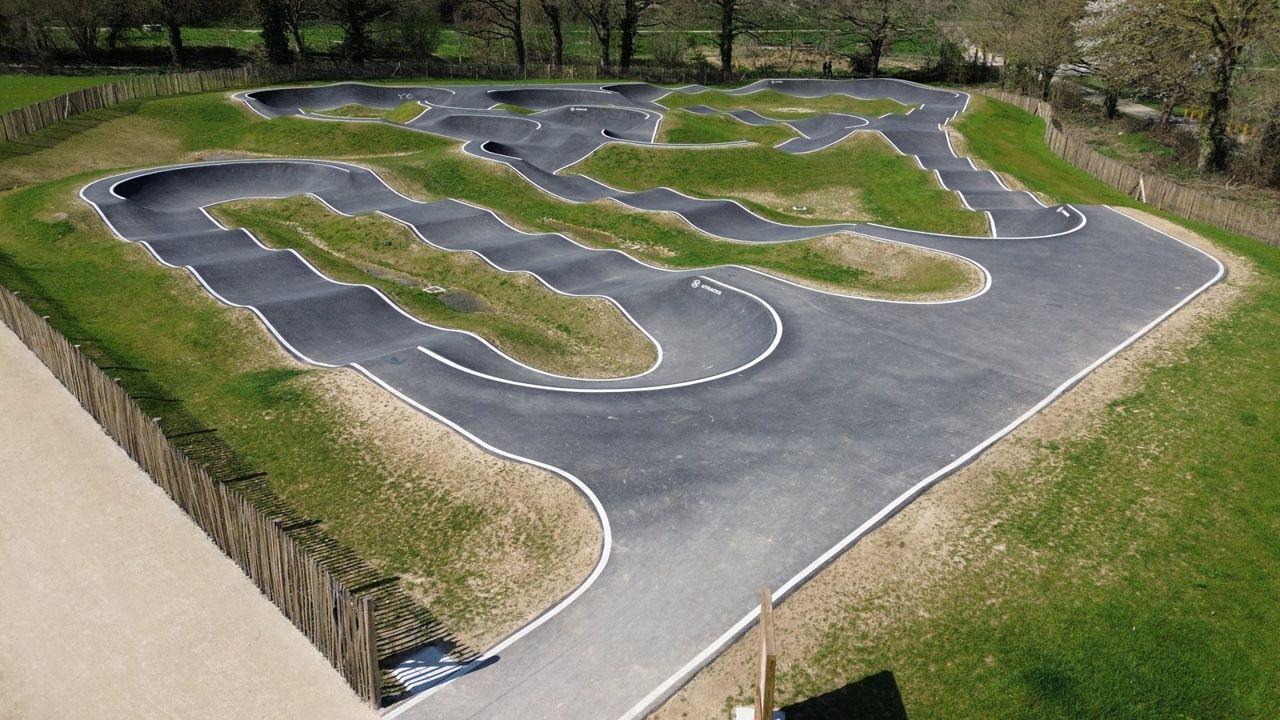
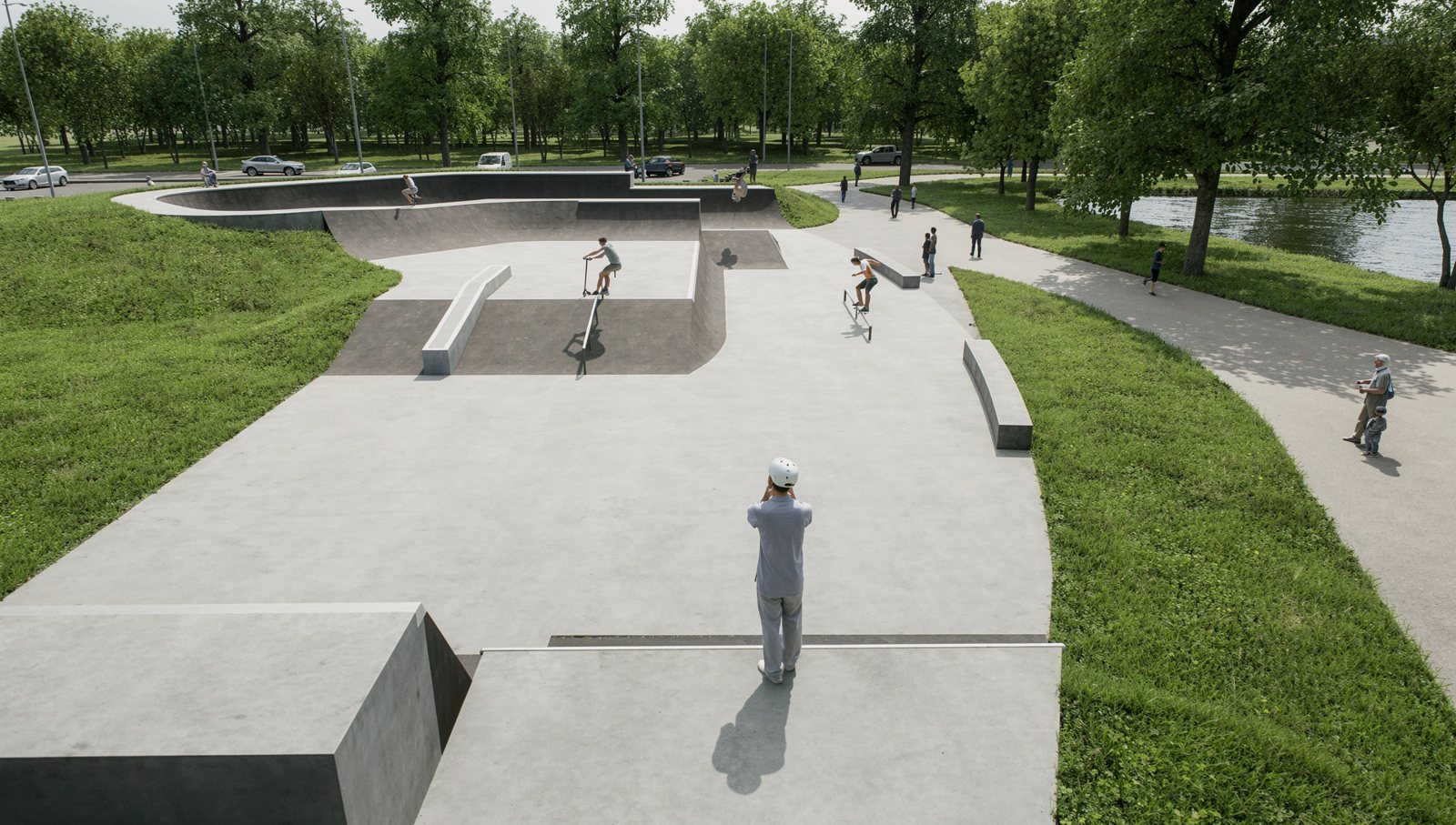
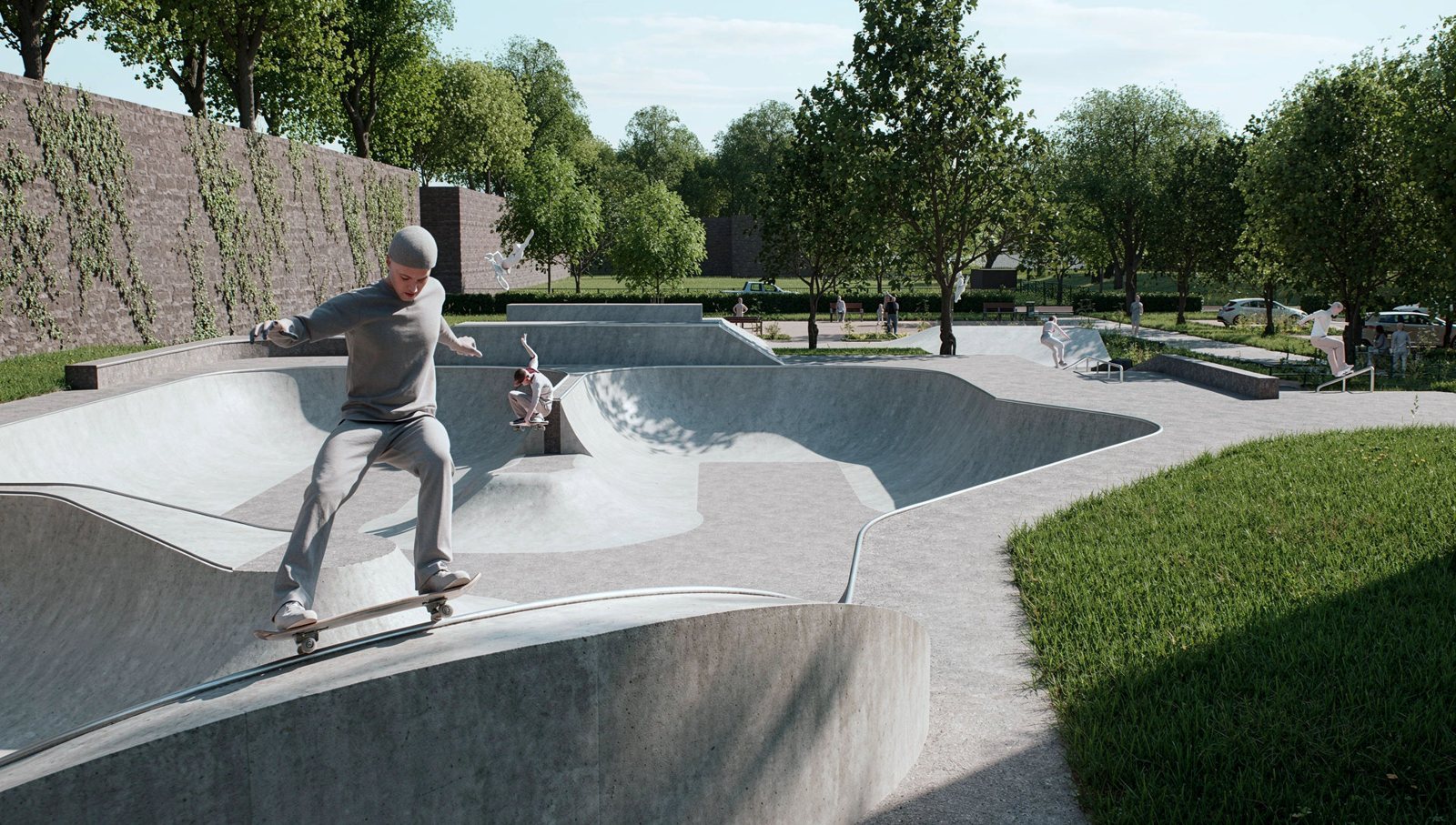
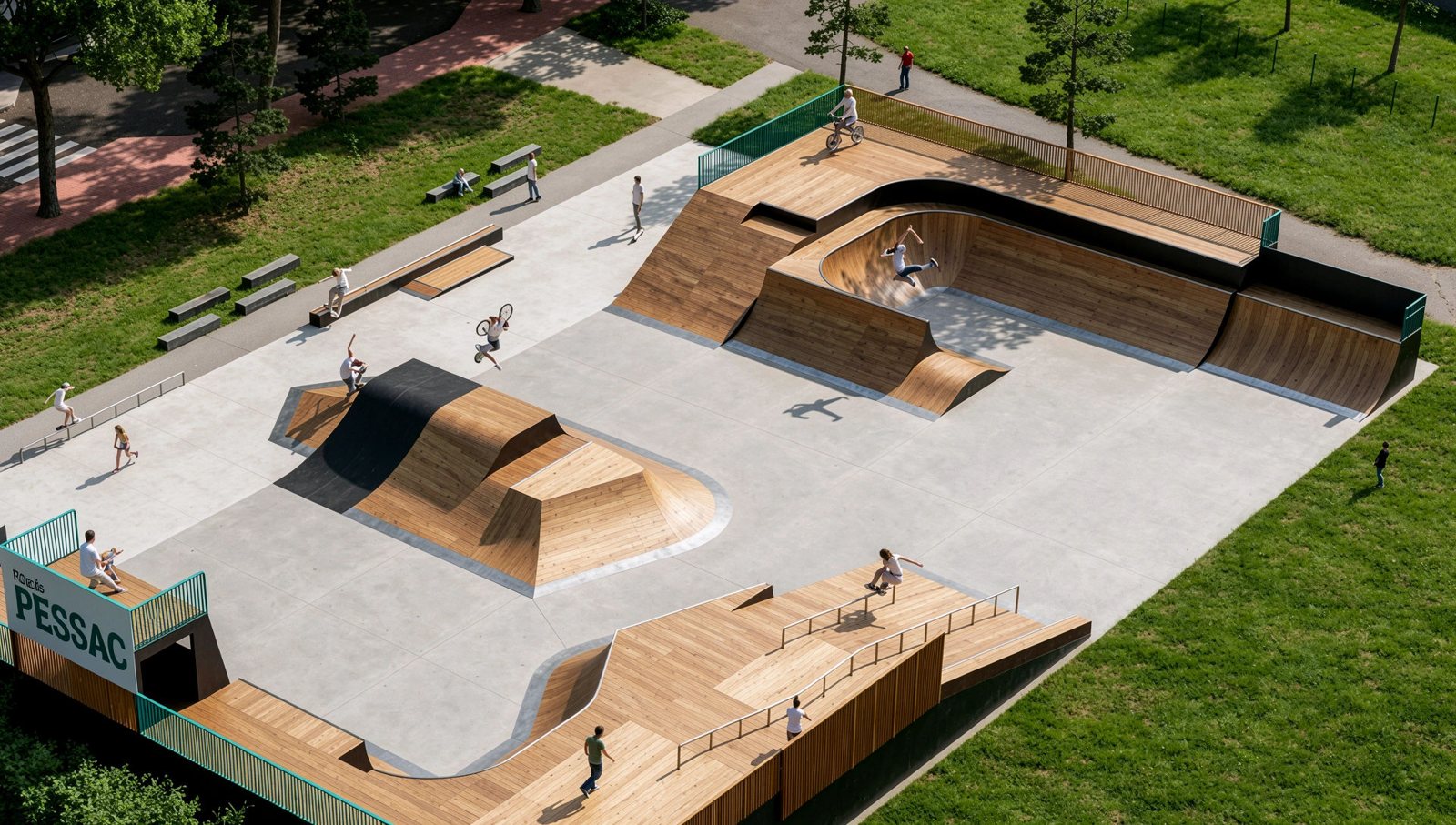
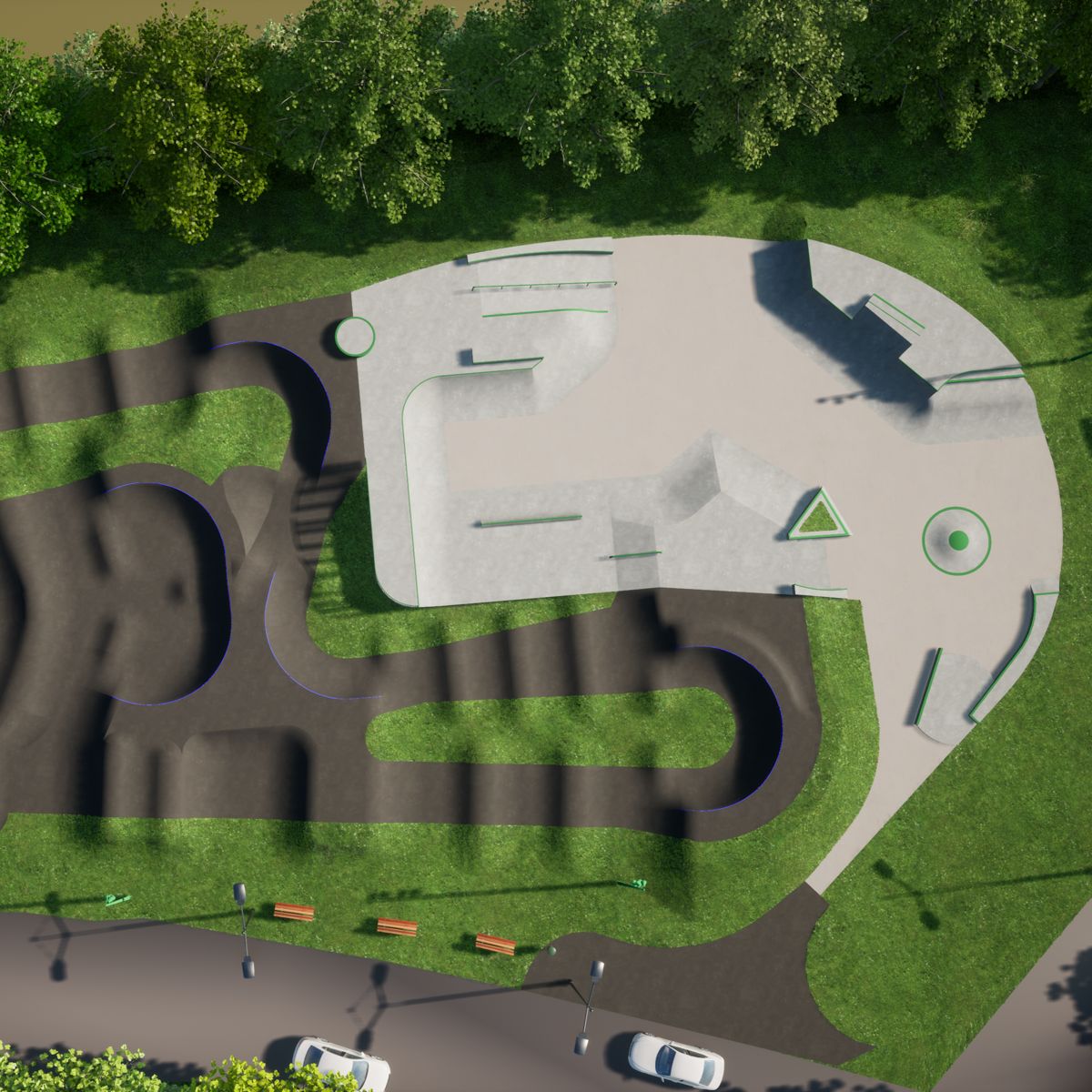
Wherever land and finances allow, Evolving Skatepark recommends pairing a pumptrack for everyone with a sporting facility chosen according to local demand and to what already exists nearby.
That is what we call an action sports complex, and it is what gives an area a genuinely complete offer rather than a facility that satisfies half the riders.
We answer a town launching its feasibility study just as readily as an authority still weighing up whether a facility makes sense at all. The first conversation costs nothing and often clears up a great deal.